
For most Canadian basements, rigid-core luxury vinyl plank (SPC) is the safest all-round choice for finished living spaces, while porcelain tile or epoxy coatings are the right call for laundry rooms, utility zones, and any basement with a flood history. Carpet tiles work in bedrooms and family rooms only when you've installed a proper insulating subfloor underneath. Standard laminate and solid hardwood do not belong below grade unless the slab is bone-dry and climate-controlled year-round.
Here's the short version by use case:
- Family room or living area: Rigid-core SPC/LVP with an insulating underlay
- Basement bedroom: SPC or carpet tiles over an insulating subfloor panel system
- Home gym: Rubber flooring or SPC with a dimpled membrane underneath
- Laundry or mechanical room: Porcelain tile or epoxy-coated concrete
- Walk-out basement: Porcelain tile or SPC with a full vapour barrier (freeze-thaw cycles demand it)
- Workshop: Epoxy or polished concrete
| Use case | Recommended material |
|---|---|
| Family room / living area | Rigid-core SPC/LVP |
| Basement bedroom | SPC or carpet tiles (insulating subfloor required) |
| Home gym | Rubber or SPC |
| Laundry / mechanical room | Porcelain tile or epoxy |
| Walk-out basement | Porcelain tile or SPC |
| Workshop | Epoxy or polished concrete |
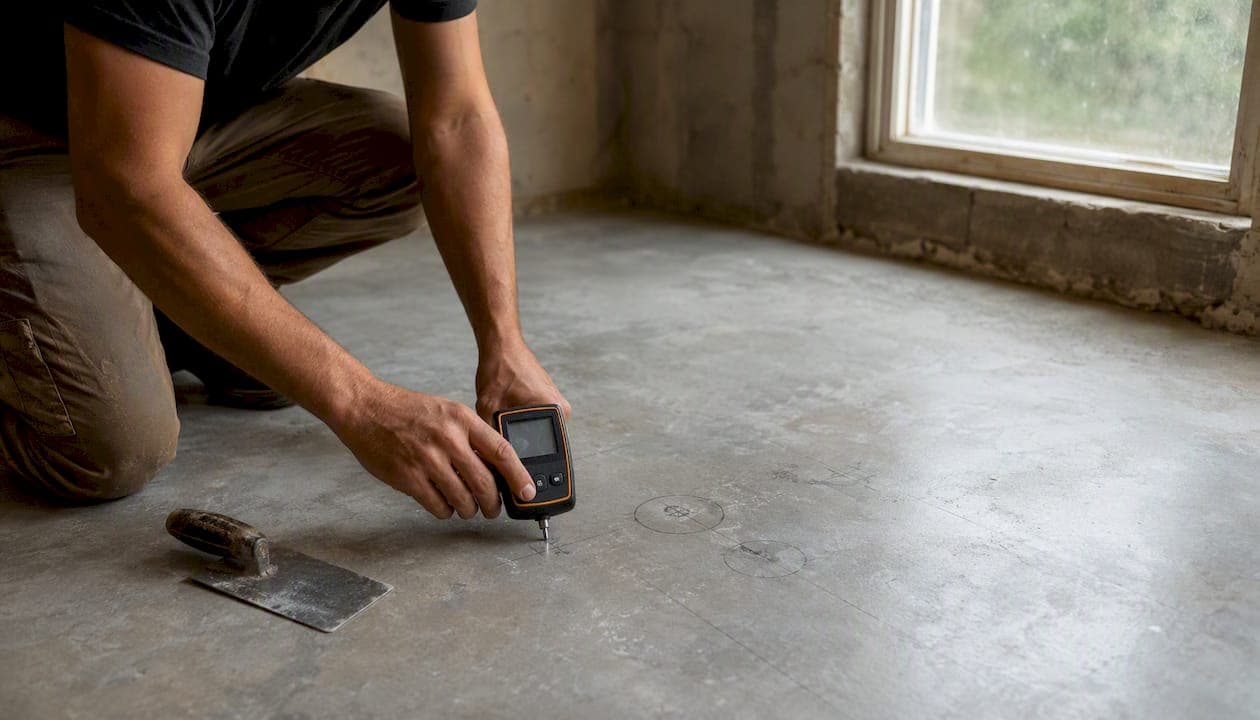
The one thing that overrides every recommendation above: test your slab for moisture before you order a single plank. The material choice matters far less than what's happening beneath it.
Key takeaways
Rigid-core SPC vinyl is the safest default for most Canadian basements, but moisture testing the slab before ordering any material is the single step that determines whether any floor will last.
| Point | Details |
|---|---|
| Test before you buy | Run a plastic sheet test or in-slab RH probe before ordering any flooring material. |
| Match material to use case | SPC for living areas, tile or epoxy for utility zones, rubber for gyms, carpet tiles only over an insulating subfloor. |
| Prep drives performance | Levelling, vapour control, and correct subfloor installation matter more than product grade alone. |
| Read warranty conditions | Manufacturer and installation warranties are separate; moisture test results and substrate prep documentation protect both. |
| Thejackedinstallers | Provides moisture testing coordination, subfloor prep, and written scopes for basement vinyl, laminate, and engineered hardwood installs across the GTA. |
Table of Contents
- How do you assess your basement before choosing flooring?
- What are the best basement flooring options for Canadian homes?
- How do you prepare and install basement flooring properly?
- How do you choose the right floor and what should you ask an installer?
- How do you maintain basement flooring and protect your warranty?
- What mistakes do homeowners most often make with basement flooring?
- A Thejackedinstallers basement project: what a professional install actually looks like
- Why rigid-core vinyl is the pragmatic default for Canadian basements
- Thejackedinstallers can handle your basement floor from test to finish
- Sources
How do you assess your basement before choosing flooring?
Start with moisture, not materials. The slab condition decides which options are even on the table, and skipping this step is the single most expensive mistake homeowners make. Experts consistently note that installing a quality floor over an active moisture source will fail regardless of how waterproof the product claims to be.
The plastic sheet test
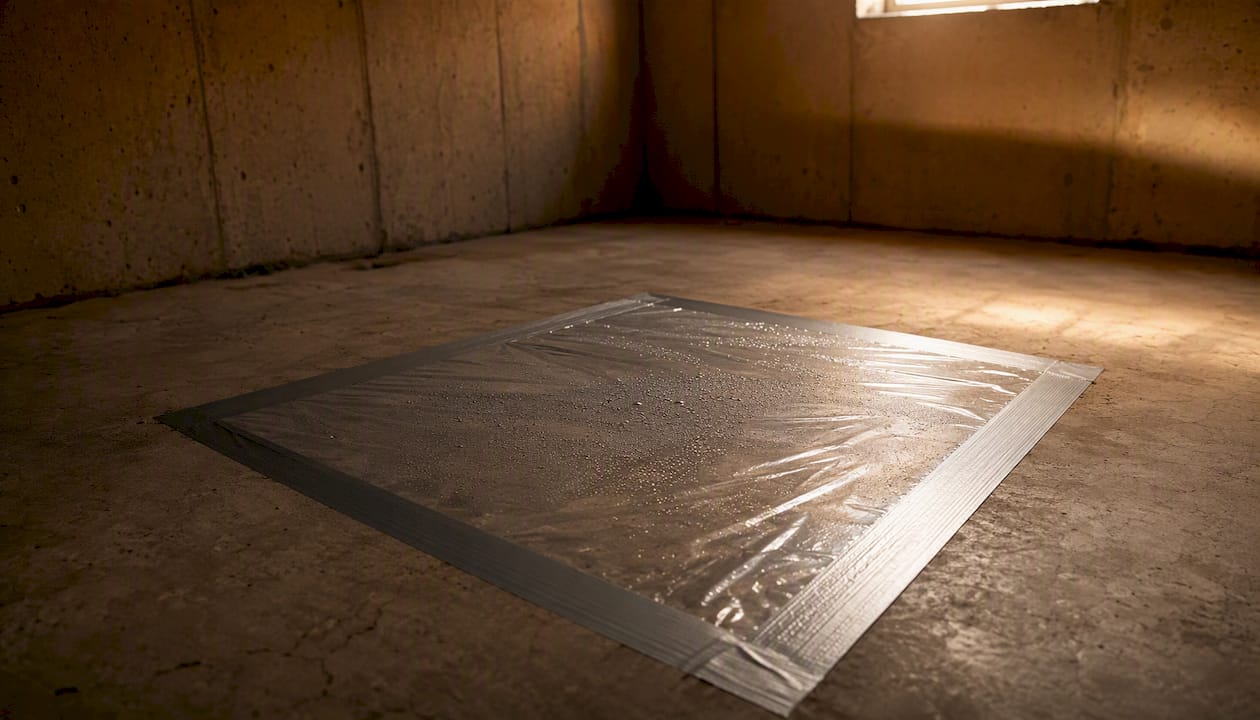
Tape a 60 cm × 60 cm piece of clear plastic sheeting to the bare concrete slab, sealing all four edges with duct tape. Leave it for 24–72 hours. Condensation or water droplets forming on the underside of the plastic means moisture is migrating up through the slab. This is a quick, free screening tool, not a precise measurement.
For anything beyond a quick check, you need numbers. Concrete moisture testing protocols include calcium chloride MVER (moisture vapour emission rate) tests and in-slab relative humidity (RH) probes. Most flooring manufacturers specify a maximum RH threshold in their warranty documentation; exceeding it voids coverage before you've laid a single plank.
Pro Tip: If you're seeing efflorescence (white chalky deposits) on your slab or walls, a musty smell after rain, or seasonal condensation on basement windows, treat those as moisture warnings even before you run a formal test. These are the slab telling you something.
Room use shapes the decision
A basement bedroom demands warmth and comfort, which pushes you toward SPC with an insulating underlay or carpet tiles over a subfloor panel. A laundry room needs a surface that can handle standing water without consequence, which means tile or epoxy. A home gym needs impact absorption and grip. Mapping the room's purpose before you shop prevents buying the wrong product for the right price.
Environmental clues worth noting before you pick materials:
- Efflorescence or mineral staining on walls or slab
- Musty or damp smell, especially after heavy rain
- Visible cracks in the slab or foundation walls
- Evidence of previous patching or waterproofing attempts
- Seasonal condensation on windows or cold pipes
Any of these signals warrants a professional moisture assessment before proceeding.
What are the best basement flooring options for Canadian homes?
Waterproof basement flooring refers to materials engineered to resist moisture and flooding; SPC luxury vinyl, porcelain tile, and epoxy coatings are the top recommended options when slab moisture is present. Here's how each material stacks up in practice.
Rigid-core SPC/LVP (stone-polymer composite luxury vinyl plank)
SPC is the safest all-round choice over concrete slabs because its inorganic rigid core is 100% waterproof and dimensionally stable in below-grade conditions. It floats over a prepared slab, handles Canada's humidity swings without cupping or gapping, and installs quickly. Installed cost in Canada varies depending on product grade and subfloor condition. Lifespan is 20–30 years with proper care.
Pros: Fully waterproof, warm underfoot with insulating underlay, DIY-friendly, wide style range, compatible with most radiant heat systems. Cons: Can feel hollow underfoot without a quality underlay; cheaper products show wear in high-traffic areas faster. Best for: Family rooms, bedrooms, home offices, walk-outs.
Porcelain or ceramic tile
Porcelain is effectively immune to moisture and survives flooding without damage. It's the correct call for laundry rooms, utility spaces, and any basement with a documented flood history. The trade-off is comfort: tile is cold and hard, and in a Canadian basement that's already cool, you'll want radiant in-floor heating underneath to make it livable. Installed cost can be higher due to substrate work and installation complexity. Lifespan is 30+ years.
Pros: Fully waterproof, extremely durable, easy to clean, survives flooding. Cons: Cold, hard, expensive to install, requires a very flat substrate, grout needs sealing. Best for: Laundry rooms, walk-outs, utility zones, flood-prone basements.
Epoxy and polished concrete coatings
Epoxy is seamless, chemical-resistant, and completely waterproof. It's the right surface for workshops, garages, and mechanical rooms where you need a surface that handles spills, tools, and heavy equipment. Professional epoxy application costs depend on slab prep and materials used. It's not warm, and it's slippery when wet unless you add a non-slip aggregate.
Pros: Seamless, waterproof, chemical-resistant, durable, low maintenance. Cons: Cold, slippery when wet, requires thorough slab prep, not comfortable for living spaces. Best for: Workshops, garages, mechanical rooms.
Rubber flooring
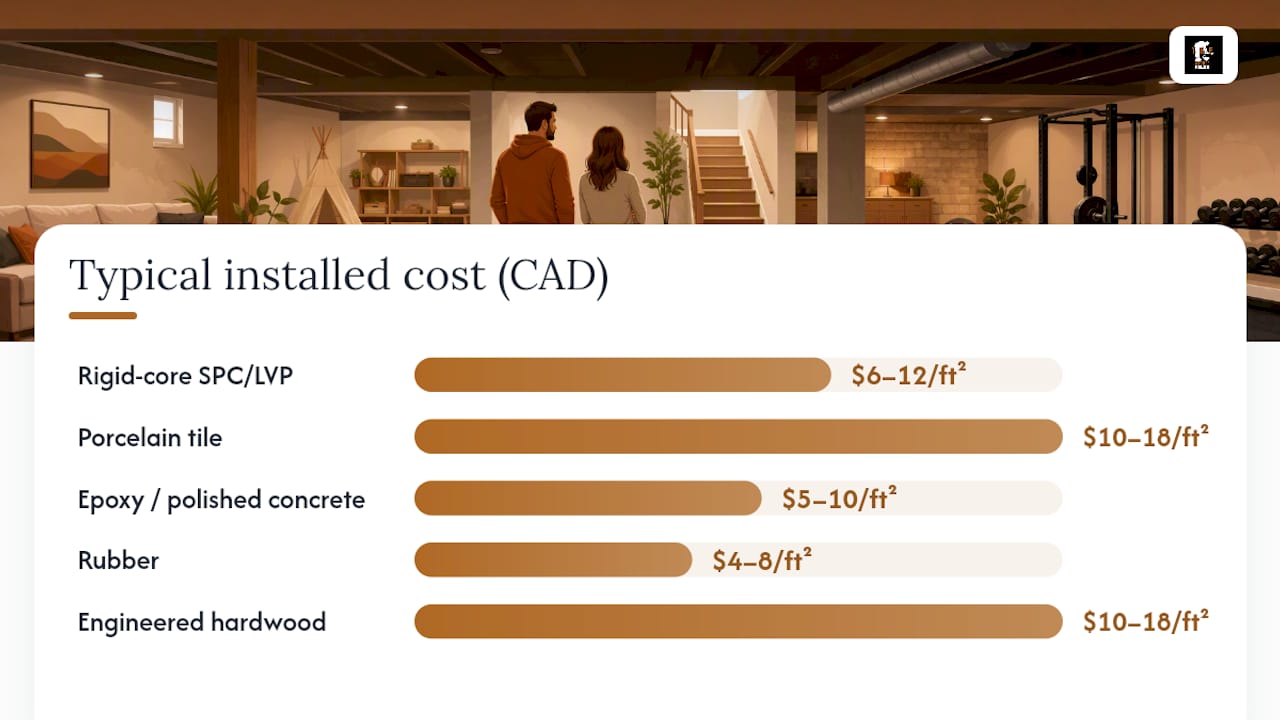
Rubber tiles or rolls are the gym floor of choice for a reason: they absorb impact, resist moisture, and provide grip. They're not typically used in finished living areas, but for a home gym or recreation room, they're hard to beat. Installed cost is roughly $4–$8 per square foot.
Pros: Impact-absorbing, moisture-resistant, non-slip, durable. Cons: Limited style options, can off-gas initially, not suited for living or sleeping areas. Best for: Home gyms, recreation rooms.
Engineered hardwood (conditional)
Engineered hardwood and some waterproof laminate products can work in basements, but only in dry, climate-controlled conditions. If your slab passes moisture testing with a comfortable margin below the manufacturer's RH threshold, and your basement maintains stable humidity year-round, engineered hardwood gives you the warmth and resale appeal of real wood. The risk is real, though: one wet season or a sump pump failure can buckle the floor permanently. Installed cost depends on material quality and installation complexity. See engineered hardwood installs in Mississauga for examples of what proper prep looks like on conditioned slabs.
Pros: Real wood appearance, warm, good resale value, better moisture tolerance than solid hardwood. Cons: Conditional use only, expensive, not suitable for wet or flood-prone basements. Best for: Dry, conditioned basements only.
Carpet tiles (synthetic)
Synthetic carpet tiles over an insulating subfloor panel system give the warmest, quietest feel of any basement flooring option. The key word is "over a subfloor." Laying carpet directly on a concrete slab traps moisture and creates mould conditions within a few seasons. With a proper insulating subfloor underneath, synthetic carpet tiles are a legitimate choice for bedrooms and family rooms. Individual tiles can be replaced if damaged.
Pros: Warmest option, quiet, comfortable, individual tiles replaceable. Cons: Requires insulating subfloor, not suitable for wet zones, needs regular vacuuming and spot cleaning. Best for: Bedrooms, family rooms (with insulating subfloor).
Standard laminate and solid hardwood
Neither belongs in a basement except under very specific, dry conditions. Standard laminate has a wood-fibre core that swells when it contacts moisture; solid hardwood moves with humidity changes and will cup, gap, or buckle below grade. If you're committed to a laminate look, choose a waterproof laminate with a sealed core, and only after your slab passes moisture testing. Even then, treat it as a conditional choice.
| Material | Water resistance | Durability | Warmth | Install complexity | Typical installed cost (CAD) | Maintenance | Best use case | Lifespan |
|---|---|---|---|---|---|---|---|---|
| Rigid-core SPC/LVP | 100% waterproof | High | Moderate (with underlay) | Low to moderate | $6–$12/sq ft | Low | Living areas, bedrooms, walk-outs | 20–30 years |
| Porcelain tile | 100% waterproof | Very high | Low (cold) | High (pro recommended) | $10–$18/sq ft | Low | Laundry, utility, flood zones | 30+ years |
| Epoxy/polished concrete | 100% waterproof | Very high | Very low | High (pro required) | $5–$10/sq ft | Very low | Workshops, garages | 10–20 years |
| Rubber | High | High | Low to moderate | Low | $4–$8/sq ft | Low | Home gyms, rec rooms | 15–25 years |
| Engineered hardwood | Conditional | Moderate to high | High | Moderate to high | $10–$18/sq ft | Moderate | Dry, conditioned basements only | 20–30 years |
| Carpet tiles (synthetic) | Low (needs subfloor) | Moderate | Very high | Low to moderate | $5–$10/sq ft | Moderate | Bedrooms, family rooms | 10–15 years |
| Standard laminate | Low | Moderate | Moderate | Low | $4–$8/sq ft | Moderate | Dry basements only (conditional) | 10–20 years |
How do you prepare and install basement flooring properly?
Proper slab preparation drives long-term performance and is often the critical factor for warranty compliance. The prep work is where most basement floor failures originate, not the product itself.
Installation checklist
Follow this sequence regardless of which material you choose:
- Inspect and repair leaks. Fix any active water intrusion through walls or the slab before anything else. No floor survives hydrostatic pressure.
- Run moisture testing. Plastic sheet test first; calcium chloride or in-slab RH probe if the result is ambiguous or the product warranty requires measured data.
- Level the slab. Most flooring products require the slab to be flat within 3 mm over 1.8 m (3/16 inch over 6 feet). Fill low spots with self-levelling compound; grind high spots.
- Install vapour barrier or dimpled membrane. A 6-mil poly vapour barrier works for many SPC installs. For added moisture management and insulation, a dimpled membrane (such as Delta-FL or similar) creates an air gap between the slab and the subfloor.
- Add insulating subfloor panels when required. For carpet tiles, engineered hardwood, or any space where warmth matters, an insulating subfloor panel system (sleeper system or interlocking panels with a thermal break) raises the floor off the slab and adds meaningful R-value.
- Acclimate materials. SPC and engineered hardwood need to acclimate to the basement's temperature and humidity before installation. Follow the manufacturer's specified acclimation period.
- Leave expansion gaps. Every floating floor needs a perimeter gap (typically 10–12 mm) to allow for seasonal movement. Skipping this causes buckling.
- Install trim and transitions. Baseboards and transition strips cover expansion gaps and complete the installation.
Pro Tip: Adding an insulating subfloor panel system raises your finished floor height by roughly 38–50 mm (1.5–2 inches). Check your ceiling height and door clearances before committing to a thick subfloor system, especially in older Canadian homes where basement ceiling heights are already tight.
Timelines and cost ranges
- SPC/LVP over a prepared slab: 1–3 days for a typical 700–900 sq ft basement; $6–$12 per square foot installed.
- Porcelain tile with substrate work: 3–5 days including curing time; $10–$18 per square foot installed.
- Epoxy coating: 2–4 days including prep, application, and cure; $5–$10 per square foot installed.
- Insulating subfloor system (add-on): $3–$6 per square foot additional, plus 1 additional day.
Radiant in-floor heating
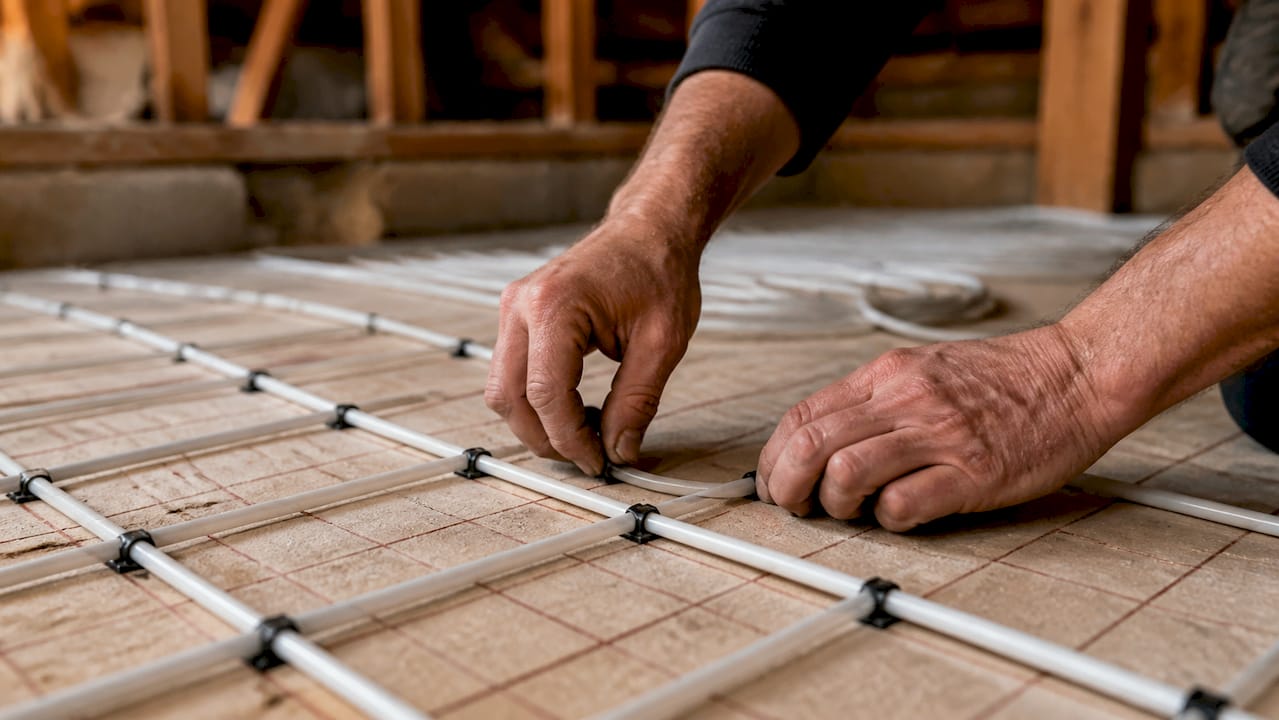
SPC and porcelain tile are both compatible with electric radiant in-floor heating systems. Engineered hardwood has stricter temperature limits; check the manufacturer's spec sheet before pairing it with radiant heat. Adding radiant heat under tile in a basement bedroom or family room is one of the most effective ways to address the cold-floor problem that makes basements feel uncomfortable year-round.
How do you choose the right floor and what should you ask an installer?
Match material to slab condition first, then room use, then budget. That order matters. A beautiful engineered hardwood floor in a damp basement is money wasted; a basic SPC floor over a properly prepared slab will outlast it by decades.
Decision checklist
- Slab passes moisture testing? If not, resolve moisture first.
- Room use: living space, utility, or gym?
- Budget: materials only, or materials plus professional installation?
- Ceiling height: can it accommodate an insulating subfloor?
- Radiant heat: planned now or in the future?
- Resale considerations: neutral, durable finishes hold value better.
- DIY comfort level: SPC is DIY-friendly; tile and epoxy are not.
Questions to ask a flooring installer
- Will you perform or coordinate moisture testing before installation begins?
- What substrate flatness tolerance do you work to, and how do you handle low spots?
- What vapour control method do you recommend for this slab, and why?
- Which manufacturer warranties does your installation method comply with?
- What's the difference between your installation warranty and the product manufacturer's warranty?
- Can you show me examples of previous basement installs, specifically below-grade projects?
- What's your timeline from site visit to completed installation?
- What does your written scope of work include?
Red flags to watch for
- An installer who doesn't mention moisture testing at all
- Suggesting standard broadloom carpet directly over a concrete slab
- No written scope of work or warranty documentation
- Vague answers about vapour control or substrate prep
- No references or photos of previous basement projects
A documented installation scope that includes moisture test results, substrate flatness tolerance, vapour control method, and warranty conditions prevents most disputes and protects the product warranty.
How do you maintain basement flooring and protect your warranty?
Most waterproof basement surfaces are low-maintenance by design. The bigger risk is what happens when a warranty claim arises and the installation documentation doesn't support it.
Maintenance by material
- SPC/LVP: Sweep or vacuum regularly; damp mop with a pH-neutral cleaner. Avoid steam mops, which can damage the locking system over time.
- Porcelain tile: Sweep and mop; reseal grout lines every 1–2 years to prevent staining and moisture penetration.
- Epoxy: Sweep and mop with a mild detergent; avoid abrasive cleaners that dull the finish.
- Rubber: Sweep and mop; avoid petroleum-based cleaners that degrade the rubber.
- Carpet tiles: Vacuum weekly; spot-clean spills immediately; replace individual tiles if a section is damaged beyond cleaning.
- Engineered hardwood: Sweep or vacuum with a soft brush; damp mop sparingly; maintain basement humidity between 35–55% year-round.
Warranty checklist
Before signing off on any installation, confirm:
- Product warranty: What does the manufacturer cover, and for how long? Most SPC products carry 15–25 year residential warranties.
- Installation warranty: What does the installer cover, and for how long? These are separate from the product warranty.
- Exclusions: Most manufacturer warranties exclude moisture intrusion from improper prep, incompatible vapour barriers, and failure to acclimate materials.
- Documentation: Do you have the moisture test results, substrate prep notes, and installation date on file?
Worth knowing: "Water-resistant" and "waterproof" are not interchangeable. Rigid-core inorganic products (SPC) are the only reliable long-term defence against slab moisture. A water-resistant laminate with a wood-fibre core will eventually fail in a basement environment, even if it holds up for a season or two.
Lifespan benchmarks to plan around: SPC 20–30 years, porcelain tile 30+ years, epoxy 10–20 years, rubber 15–25 years, carpet tiles 10–15 years, engineered hardwood 20–30 years in conditioned basements.
What mistakes do homeowners most often make with basement flooring?
The single biggest mistake is installing moisture-sensitive flooring over an untested or actively wet slab. Everything else on this list is secondary to that.
-
Skipping moisture testing entirely. Ambient dryness is not a test. A slab can feel dry to the touch while emitting enough moisture vapour to destroy a floor within two years. Run the plastic sheet test at minimum; use an RH probe if the product warranty requires it.
Pro Tip: Test in multiple spots across the slab, not just one corner. Moisture levels vary across a single basement floor, especially near exterior walls or floor drains.
-
Laying broadloom carpet directly over concrete. Even synthetic carpet traps moisture between the backing and the slab. The result is mould, odour, and a floor that needs to come out within a few years. Always use an insulating subfloor panel system underneath.
-
Trusting "waterproof" labelling without reading the core construction. Manufacturers and experienced installers warn that "water-resistant" is not the same as "waterproof." Only rigid-core inorganic products are reliably waterproof long-term. Check whether the core is wood-fibre or stone-polymer composite before buying.
-
Installing dual vapour barriers. Two vapour barriers trap moisture between them rather than managing it. Use one correctly specified barrier or membrane, not two.
Pro Tip: If your installer suggests adding a second vapour barrier "for extra protection," that's a sign they may not understand moisture management. One correctly installed dimpled membrane or poly barrier is the right answer.
-
Ignoring expansion gaps. Even 100% waterproof materials can fail if expansion gaps are insufficient. Floating floors that are pinched against walls or obstacles will buckle when the material expands seasonally.
-
Confusing waterproof flooring with flood protection. Waterproof does not mean flood-proof. Severe flooding or hydrostatic pressure requires foundation waterproofing, a sump pump system, and professional remediation before any finish flooring goes down.
A Thejackedinstallers basement project: what a professional install actually looks like
On an 800 sq ft basement vinyl installation in Hamilton, the Thejackedinstallers team ran moisture testing across five points on the slab before any materials were ordered. Two of those points showed elevated readings near the exterior wall, which wouldn't have been visible to the eye. The team addressed those areas with a dimpled membrane and additional substrate levelling before proceeding. The result was a finished SPC floor that passed the manufacturer's installation requirements and came with a full warranty intact. Without that testing step, the elevated moisture zones would have been buried under the floor, and the warranty would have been void from day one. See the full Hamilton basement transformation for project photos and scope details.
When to hire a professional instead of DIYing
- Active moisture intrusion or hydrostatic pressure (always requires a pro)
- Slab that needs more than minor levelling
- Radiant in-floor heating installation
- Products with warranty conditions that require certified installation
- Engineered hardwood in a conditioned basement (the margin for error is narrow)
- Any project where the subfloor system adds complexity beyond a simple floating floor
Why rigid-core vinyl is the pragmatic default for Canadian basements
The Jacked Installers' position on this is straightforward: moisture testing and substrate prep are the highest-return steps in any basement flooring project, and they're the steps most often skipped. A homeowner who spends $15 on a plastic sheet test and two hours reading their slab before ordering materials will almost always get a better outcome than one who buys a premium product and installs it over an untested slab.
Rigid-core SPC is the practical default for most Canadian basements not because it's the flashiest option, but because it's the most forgiving one. It handles the humidity swings that come with Canadian seasons, it floats over minor slab imperfections, and it doesn't require the same dry, climate-controlled conditions that engineered hardwood demands. For a walk-out basement facing freeze-thaw cycles, or a below-grade family room in an older Ontario home, SPC with a dimpled membrane and an insulating underlay covers most of the risk.
The exceptions are real. A dry, climate-controlled basement with a slab that consistently passes moisture testing is a legitimate candidate for engineered hardwood installation. A laundry room or utility zone should get tile or epoxy regardless of how dry the rest of the basement is. And a home gym should get rubber, full stop.
Get a moisture test done before you order anything. That single step shapes every decision that follows.
Thejackedinstallers can handle your basement floor from test to finish
Choosing the right material is only half the job. The other half is making sure the slab is ready for it, the vapour control is correct, and the installation meets the warranty conditions the manufacturer actually requires.

Thejackedinstallers specialises in vinyl, laminate, and engineered hardwood installation for residential and commercial projects across the GTA and surrounding areas. For basement projects specifically, the team coordinates moisture testing before any materials are sourced, handles subfloor levelling and vapour control, and provides a written scope of work that documents every prep step. That documentation matters when a warranty claim comes up years later.
The free on-site quote includes a slab assessment, a recommended material and subfloor approach, and a clear timeline. No guesswork, no vague verbal estimates. Request your free basement flooring quote and get a written scope that protects your investment from the slab up.
Sources
The following resources informed this guide and are worth bookmarking for your own research:
- Best Waterproof Basement Flooring 2026: Options, Costs & ROI
- Best Flooring for Basements: How to Beat Moisture from Below (2026)
- Best Basement Flooring Over Concrete 2026: SPC vs. Laminate | Floorzi
- 8 basement flooring options — Wagner Meters
- How to install flooring in your basement: Complete DIY guide – Engineers and Architects of America
- Best Basement Flooring Options, Costs and Ideas | HGTV
A note on Canadian context: Many flooring guides are written for US climates and building practices. Canadian basements face specific challenges — freeze-thaw cycles on walk-outs, tighter ceiling heights in older homes, and humidity swings driven by cold winters and humid summers. Always verify that the product and installation method you choose is rated for your specific slab conditions and local climate.