
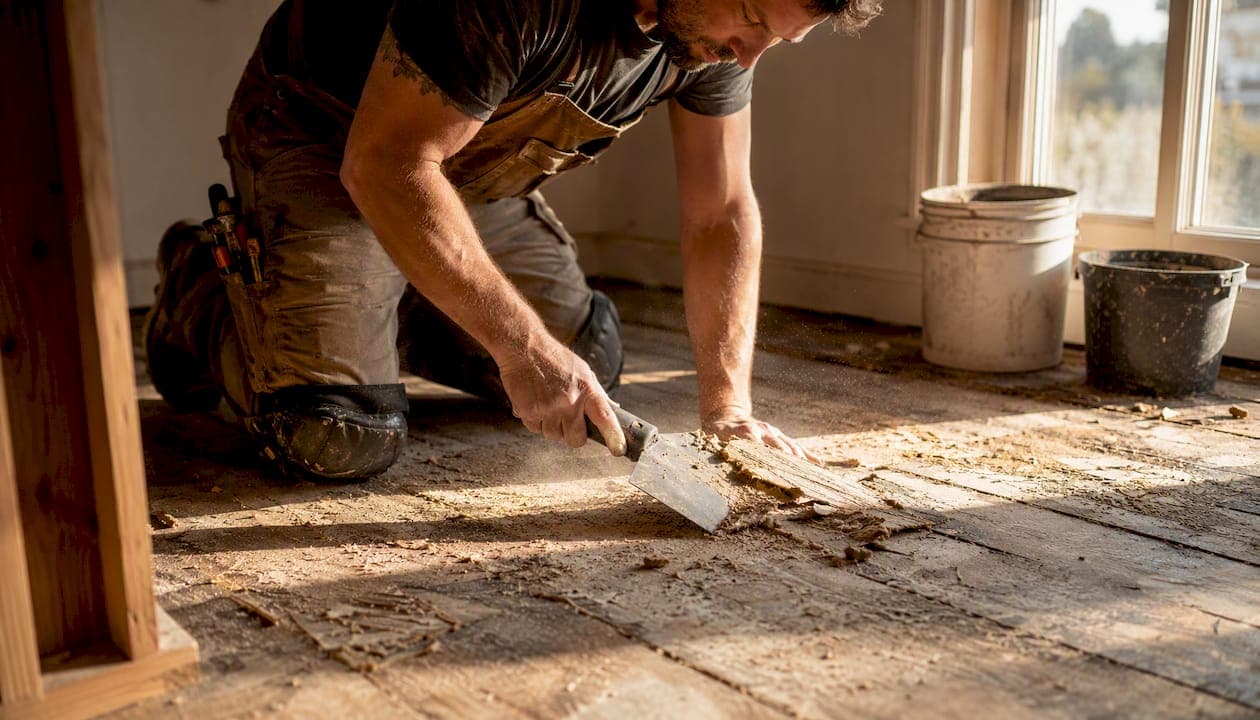
Hire a qualified flooring contractor to remove your existing floor coverings and prepare the substrate before any engineered hardwood, solid hardwood, or LVP goes down. Skipping professional removal puts your warranty at risk and almost always creates problems the new floor will expose. The first thing to do: book an on-site inspection that includes moisture testing and a straightedge flatness check before you sign anything.
Professional removal covers more than pulling up old boards. A proper scope includes:
-
Removal of baseboards, trims, and transitions
-
Mechanical removal of adhesives and fasteners
-
Safe disposal and recycling, including asbestos identification and handling per provincial rules
-
Moisture testing: calcium chloride or in-situ RH probe for concrete slabs; pin or pinless meter for wood subfloors
-
Straightedge flatness check across the full floor, mapped and documented
Pro Tip: Ask for the flatness and moisture readings in writing before materials are ordered. Industry tolerance for hardwood is a small, industry-standard flatness range over a typical 10-foot span; if your contractor cannot quote the industry-standard flatness range, keep looking.
Key takeaways
Professional removal and subfloor preparation by a qualified GTA contractor is the single most important step before any hardwood or LVP installation.
| Point | Details |
|---|---|
| Get readings in writing | Require documented moisture and flatness measurements at the estimate, before materials are ordered. |
| Know the tolerance | Industry standard for hardwood is no more than 3/16 inch over a 10-foot span; confirm your contractor quotes this. |
| Verify coverage | Confirm WSIB and liability insurance with certificate numbers, plus a workmanship warranty. |
| Watch for red flags | Vague scopes, no moisture readings, pricing that omits disposal, and pressure to buy materials early are all warning signs. |
| The Jacked Installers | Covers full removal and prep for hardwood and LVP across Burlington, Oakville, Mississauga, Brampton, Hamilton, and the GTA. |
Table of Contents
What does removal and subfloor prep cost in the GTA?
Pricing varies by substrate, floor size, and condition. Concrete slabs that need grinding, priming, and a full pour of self-levelling compound cost more than a wood subfloor that needs re-screwing and a few panel repairs. Old carpet removal is typically the fastest and least expensive phase; removing glued-down hardwood or thick adhesive residue adds labour and time.
Timeline-wise, a standard residential removal and prep in Burlington, Oakville, or Mississauga runs one to three days for the removal phase, plus cure time for any levelling compound or primer, which can add 24–48 hours before flooring delivery is appropriate. Builders and property managers scheduling multiple units should build that cure window into the trade sequence.
What should you ask a contractor before hiring?
Three questions cut through vague bids quickly:
-
What moisture readings are acceptable, and how will you document them? Manufacturer installation guides for engineered hardwood require recorded moisture tests left with the owner. A contractor who cannot answer this is not following manufacturer specs.
-
What is your flatness tolerance, and what corrective method do you use when a slab is out? Low spots beyond a commonly recognized small depth typically need a cementitious self-leveller with primer; not a patch compound.
-
Are you WSIB-covered and carrying liability insurance? Get the certificate numbers, not just a verbal yes.
Also ask for a written scope that names the specific primers, sealers, and levelling compounds to be used. Vague line items like “floor prep” are a red flag.
Who does this work well in the Greater Toronto Area?
The Jacked Installers Inc. is a Burlington-based flooring contractor serving homeowners, custom builders, renovation contractors, and property managers across Burlington, Oakville, Brampton, Mississauga, Hamilton, and the broader GTA. Their documented hardwood installation portfolio includes large-format solid hardwood projects and custom pattern work — herringbone, chevron — where subfloor prep tolerances are especially tight.
Why subfloor prep is the real job
The floor material gets all the attention. The prep work determines whether it lasts.
Most hardwood failures — cupping, gapping, squeaking, adhesive bond failures — trace back to a subfloor that was not flat, not dry, or not clean when the floor went down. Red Seal floorcover installer training frames substrate preparation as a distinct, skilled trade task: scraping, sanding, applying primers and sealers, and managing contaminants including asbestos. It is not a cleanup step before the real work starts.
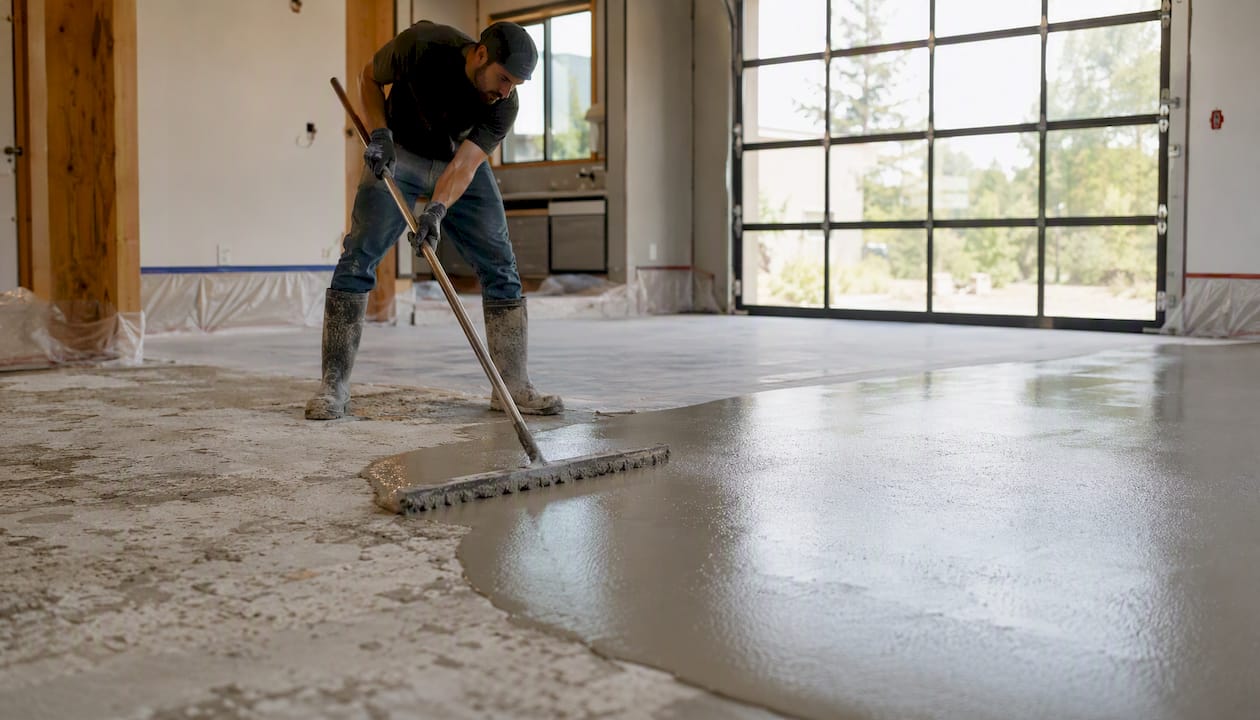
On concrete, grinding removes sealers and opens the surface for primer adhesion. Where low spots exceed about 1/4 inch, a cementitious self-leveller is the right tool, but “self-levelling” is partly a marketing term. Applied without gauge rakes and proper technique, it pools and bonds poorly. Small patch compounds used to correct whole-room flatness is one of the most common and expensive mistakes in the trade.
On wood subfloors, APA R300 guidance covers panel thickness, span ratings, and fastening patterns. Re-screwing a squeaky subfloor is fast; sistering a joist or replacing a damaged panel takes longer and should be scoped before pricing is finalised.
Dust control and containment matter too. A professional crew uses poly barriers and HEPA vacuums. Homeowners and project managers should expect a clean handoff with disposal receipts and a sign-off checklist before flooring is delivered.
The Jacked Installers handles removal and prep across the GTA
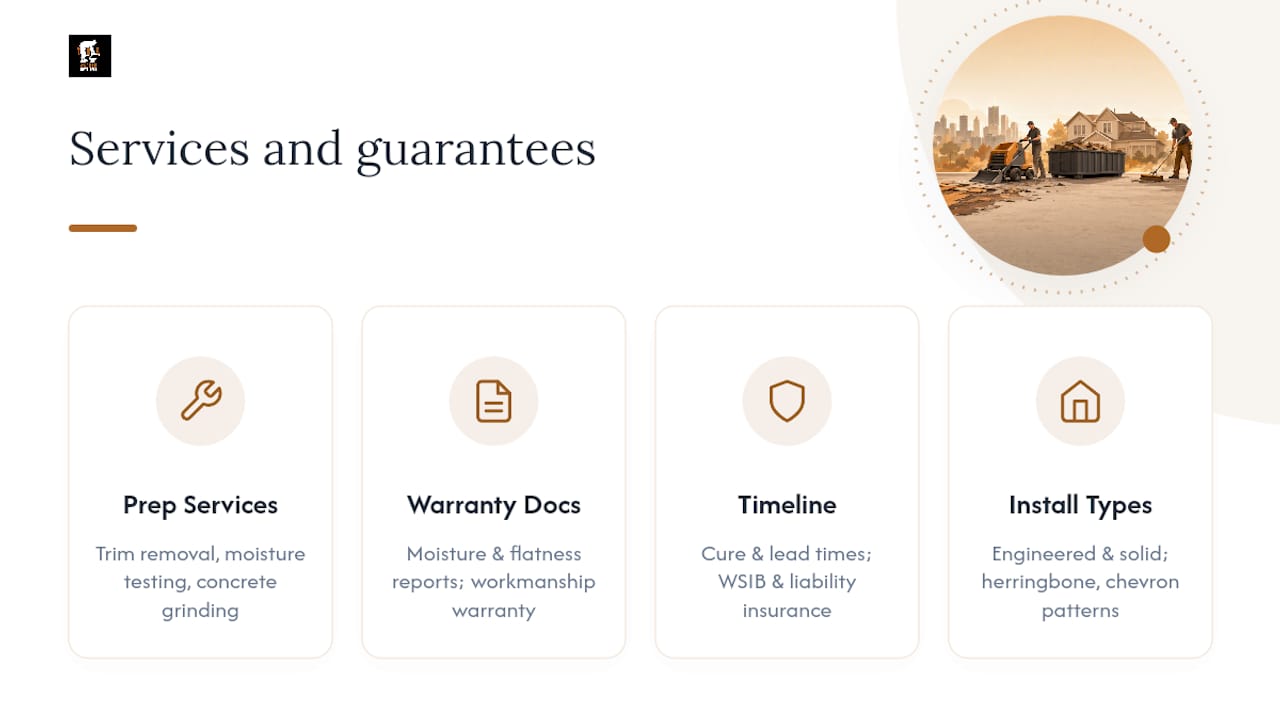
The Jacked Installers Inc. covers the full removal and subfloor preparation scope: trim and transition removal, adhesive and fastener remediation, moisture testing, concrete grinding, self-levelling, plywood and OSB repairs, joist sistering, underlayment panel installation, and priming and sealing to manufacturer specs. Every project comes with documented moisture and flatness readings, a workmanship warranty, WSIB and liability insurance, and a timeline that shows cure and lead times so other trades are not held up.
Their hardwood installation work across the GTA spans engineered and solid hardwood in custom patterns — herringbone, chevron, large-format solid — where a fraction of an inch in flatness changes the outcome. Request a free on-site inspection and written report before you buy materials or book your next trade.
Sources
-
How to level a floor for wood floors before installation | Havwoods
-
Leveling subfloors: why small patches fail and what pros do differently (ForestSource)
Statistic to know: The industry flatness tolerance for hardwood installation is no more than 3/16 inch over a 10-foot span. Deviations beyond that require corrective work before any flooring is installed.
This article is general information, not a substitute for advice from a qualified lawyer. Consult a qualified legal professional about your own circumstances before acting on anything here.